
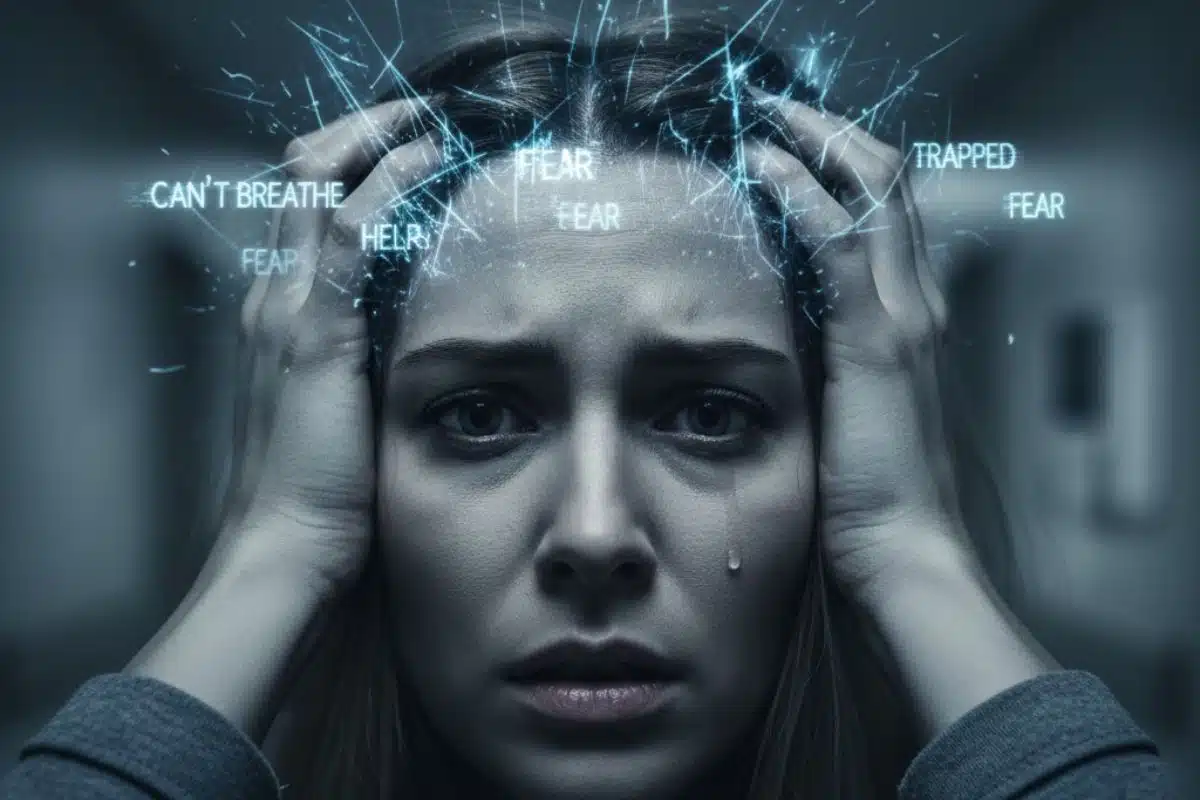
Words don’t always work when you have a panic attack. You can feel like you’re going to drown, can’t breathe, and are scared, and then you might worry that no one will really get what just happened. I get that fear—the worry that you won’t be able to find the correct words, that other people won’t understand, or that your experience will be downplayed.
In this guide, I’ll talk about what a panic attack truly feels like, how it’s different from regular anxiety, how to explain it to someone you care about, and how they can help you when it happens.
Understanding What You’re Trying to Explain
Let’s make sure you know what’s going on with you. Panic attacks are abrupt, strong waves of fear that make your body respond in a big way, even when there is no genuine risk or obvious reason for it. When there’s no fire, they’re your body’s alarm system.
In the previous year, about 2.7% of individuals in the U.S. had panic disorder. Women are almost twice as likely as men to have it (3.8% versus 1.6%). So if you’re having these attacks, you’re not alone at all, even if it may feel like you’re the only one.
What a Panic Attack Actually Feels Like
“It’s like my body thinks I’m in immediate danger even though nothing dangerous is happening.”
More specifically, a lot of people say they feel a mix of the following things (these are appropriate things to say when you want to explain a panic attack):
- A pounding or racing heart, sometimes with chest tightness (feels like it might be a heart attack).
- Shortness of breath, throat tightness, or a choking sensation.
- Trembling, sweating, dizziness, or feeling faint.
- Nausea, stomach pain, or a wave of cold/heat.
- Tingling or numbness in hands or feet.
- A sense of unreality (derealization) or feeling detached from yourself (depersonalization).
- Intense fear — often a fear of losing control or dying — that peaks quickly (usually within 10–20 minutes).
How to Explain an Anxiety Attack Vs a Panic Attack
People mix these up a lot. A short way to explain the difference:
- Panic attack: abrupt, strong, and typically out of the blue. The symptoms get worse quickly and are quite physical.
- Anxiety attack: It usually starts with worry that builds up over time and is often connected to a specific stressor, like a test, a speech, an event, or a meeting. It can feel like a lot of work and last a long time, but not usually with the sudden, short-lived intensity of a panic attack.
What to Tell a Loved One to Do (And Not Do) During an Attack
If you’re helping someone who is panicking, ask them what they want. If you want to get your partner or pal ready ahead of time, say the following:
Do:
- Stay calm and grounded. Your calm matters more than perfect words.
- Speak slowly and firmly: “You’re safe. I’m with you.”
- Guide breathing: count slowly with them (“inhale 4… exhale 6”) or do paced breathing together.
- Give them a small job to do to help them feel more grounded, such as holding an ice cube, naming five items they notice, or pressing their feet to the floor.
- Ask, “What helps you most?” and then do that — even if it’s silence.
Don’t:
- Tell them to “just relax” or “calm down” — those phrases usually increase shame and panic.
- Assume they’re exaggerating or that it’s attention-seeking. Panic attacks are real and terrifying.
- Push them into public or stressful situations right away. Give space and time to recover.
The Broader Context: Living with Panic Disorder
When talking about a panic attack, it’s not enough to just talk about one occurrence. Help your loved ones comprehend how it may affect them in the future:
“Having panic disorder means I always worry about when the next attack will happen. This fear of fear can wear you out. I might stay away from places where I’ve had attacks before, which could hurt my employment, social life, and relationships. This issue is so bad that about 44.8% of people with panic disorder have trouble doing what they need to do every day.
Connecting to Current Mental Health Challenges
Recent data shows that 62% of adults in the U.S. say that societal division is a major source of stress, and 54% say they feel alone. Stress and alienation in the larger world can make panic symptoms worse; it’s even more important to explain them.
You may remark to someone you love, “Everyone is stressed out right now, and that makes my panic disorder worse.” When I read about things that stress me out or feel like I’m not connected to people, my attacks happen more often. “I need your help and understanding more than ever.”
The Treatment Journey
When you talk about your panic attacks, also say that you’re getting help. In my work, I use a full strategy that includes:
Therapy: Cognitive Behavioral Therapy (CBT) helps people figure out what makes them have attacks and how to change the way they think to stop them. Exposure therapy helps you deal with things that scare you in a safe way over time.
Medication: When needed, SSRIs or SNRIs can help lessen the number and severity of panic attacks. Some people benefit from anti-anxiety drugs for immediate reduction of symptoms.
Holistic Support: controlling panic disorder involves a lot of different things, such as getting enough sleep, controlling stress, eating well, exercising, and practicing mindfulness.
Finding the root cause: I use modern testing to find underlying disorders that could be causing anxiety symptoms, such as thyroid abnormalities, hormonal imbalances, or nutritional deficiencies.
Tell your loved ones, “I’m working with a doctor to deal with my panic attacks through therapy and maybe medication.” It will take time to get healthier, but I am determined to do so. “Your help during this time means the world to me.”
When to Seek Emergency Help
Tell your loved ones what a panic attack is and what a medical emergency is. Panic attacks are scary, but they don’t hurt your body. But if you feel:
- Chest pain that spreads to your arm or jaw
- Trouble breathing that doesn’t improve
- Loss of consciousness
- Symptoms that last longer than 30 minutes
These could indicate a medical emergency requiring immediate attention.
Final Note From Me, Dr. Shahrnaz Mashkoor
It’s not easy to talk about panic attacks, yet one honest chat can make you feel more supported. My name is Dr. Shahrnaz Mashkoor, and I am a Doctor of Nursing Practice and a dual-certified psychiatric and family nurse practitioner (PMHNP-BC, FNP). I work at The Wellness Institute of Southern Nevada, where I assist patients learn how to communicate about their problems in ways that make them feel understood and cared for. You don’t have to suffer in silence if you get panic attacks often, they are too much for you, or they are hurting your relationships. When you’re ready, get in touch with us, and we’ll work together to make a caring, well-thought-out strategy that helps your mind, body, and life.
FAQs
Q: How do I explain a panic attack in one sentence?
A: “It feels like my body thinks I’m in immediate danger — fast heart, breathless, dizzy — even though nothing dangerous is happening.”
Q: How to explain an anxiety attack to a loved one?
A: “It’s growing waves of worry that feel physical and exhausting; it builds up, whereas a panic attack usually comes on suddenly.”
Q: What can a partner do to help during a panic attack?
A: Stay calm, offer to breathe with them, use grounding (5-4-3-2-1), and ask what they need.
Q: How to describe panic attacks so someone understands?
A: Use sensory comparisons: “like a heart-attack feeling without a heart attack” or “every alarm in my body shouting danger.”
Q: When is a panic attack an emergency?
A: If chest pain is atypical, unconsciousness, or symptoms don’t ease and suggest a medical cause, call emergency services.
Q: How to explain panic attacks to others who think I'm overreacting?
A: Make it clear that panic attacks are a real medical issue, not something you choose to do or overreact to. Share numbers that demonstrate that almost 45% of persons with panic disorder have major problems, and that women are twice as likely as males to have them.
Q: Should I explain my panic disorder to my employer?
A: This is a choice you have to make for yourself. If your panic episodes make it hard for you to do your job, telling your boss about them can help you get the help you need. The Americans with Disabilities Act protects you from having to provide reasonable adjustments.